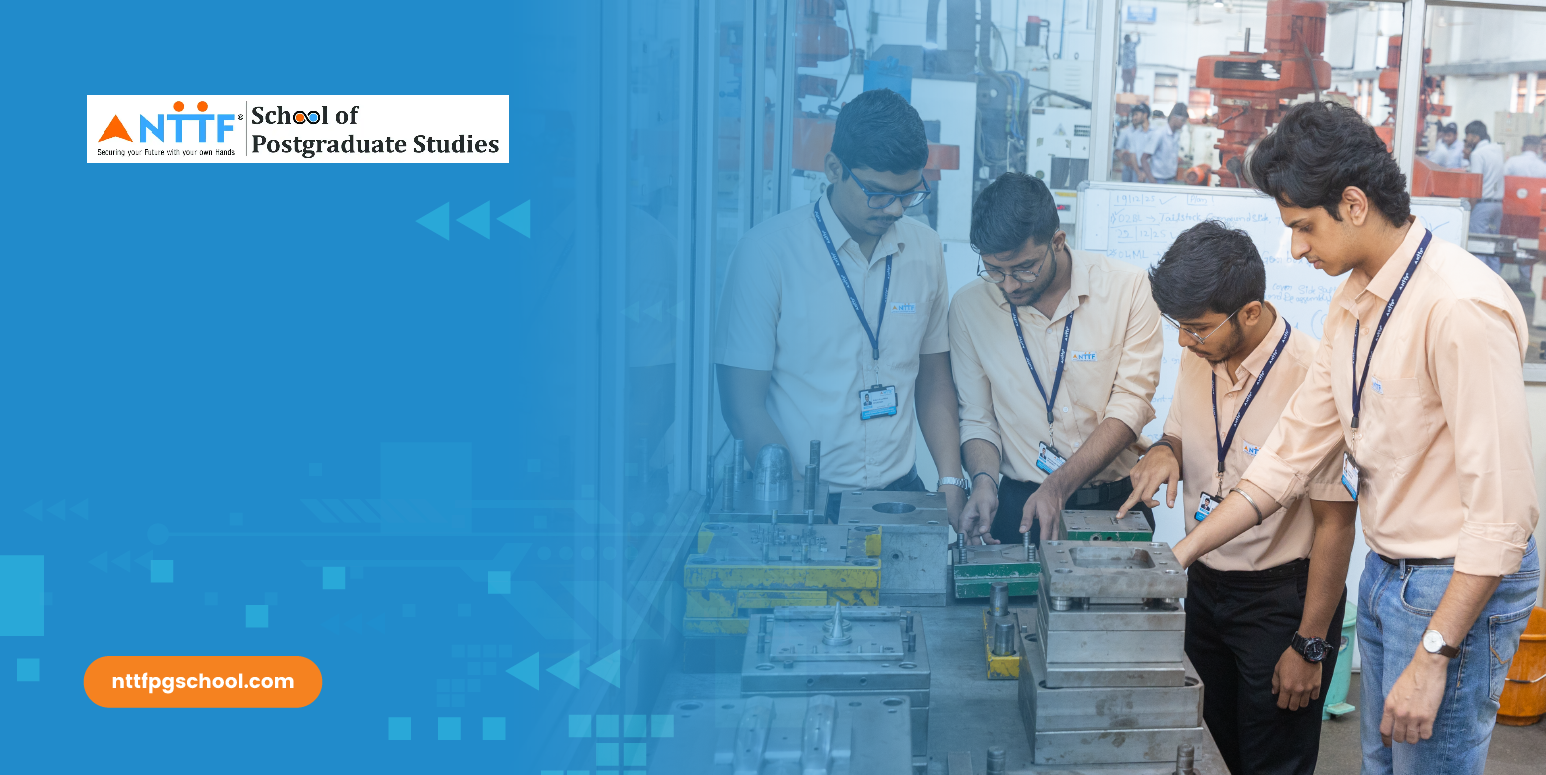
Modern manufacturing depends on precision. Every plastic part needs a mould. Every metal part needs a die. Every product needs a tool before it reaches production. This is why tool design has become a high-value career path for diploma holders and engineering graduates.
Many students study mechanical engineering or production engineering. But they still struggle to enter core manufacturing roles. The reason is simple. Most companies need practical design skills. They need people who understand CAD, CAM, moulds, dies, tolerances, materials, machines, and production requirements. A postgraduate diploma in tool design helps fill this gap. It connects classroom learning with real factory needs.
Want to build a strong career in core manufacturing? Read the full blog to understand how a postgraduate diploma in tool design can help you enter mould design, die casting, CAD CAM, and industrial product development roles with stronger practical skills.
What is a Postgraduate Diploma in Tool Design?
A postgraduate diploma in tool design is an advanced technical program. It is designed for students who want practical manufacturing careers. The course usually focuses on:
| Core Area | What You Learn |
| Die Design | Tools used for metal forming and casting |
| Mould Design | Tools used for plastic and polymer products |
| CAD CAM | Digital design and manufacturing software |
| Product Design | Designing parts for real production |
| Manufacturing Processes | How products are made in factories |
| CNC Machining | Precision machining for industrial parts |
| Metrology | Measurement and quality checking |
| Tool Room Practice | Hands-on tool making and inspection |
This course is not only about drawing designs. It teaches students how tools work inside real production systems.
Top 5 Benefits of Postgraduate Diploma in Tool Design
- Builds Practical Industry Skills
A postgraduate Diploma in tool design helps students move beyond theory. It teaches how dies, moulds, jigs, fixtures, CAD CAM systems, and manufacturing tools work in real production. This makes students more prepared for core industrial roles where practical design knowledge matters. - Improves Job Opportunities After Diploma
Many B.E Degree holders struggle to find strong technical roles because they lack advanced design skills. A tool design program adds focused training in mould design, die design, CNC, CAD CAM, and product development. This can improve career opportunities in manufacturing, automotive, electronics, plastics, and heavy engineering industries. - Strengthens CAD CAM Knowledge
Modern factories depend on digital design and computer-aided manufacturing. A CAD CAM tool design course helps students learn software used for 2D drafting, 3D modelling, machining, and production planning. These skills are valuable because companies need people who can connect design with actual manufacturing. - Opens Careers in Die Casting and Mould Design
Tool design creates direct career paths in die casting, plastic mould design, press tool design, injection moulding, and tool room operations. These areas are important in automotive parts, consumer products, medical devices, electronics, and industrial equipment. A strong mould design certification course can help students enter these specialised fields with better confidence. - Supports Long-Term Career Growth
A postgraduate diploma in tool design does not only help with the first job. It also builds a strong base for future growth in design engineering, production planning, quality control, product development, and manufacturing management. Students who keep improving their software and shop-floor knowledge can grow into senior technical roles over time.
Why Die and Mould Design Course Skills Matter
Apart from a postgraduate diploma in tool design, a die and mould design course gives students skills that are directly used in industry. Most manufacturing companies cannot produce parts without proper tools.
Mould design is used to create plastic products. It is common in electronics, automobiles, medical devices, packaging, appliances, and consumer goods. A mould design certification course helps students understand how plastic parts are designed for mass production.
A CAD CAM tool design course also helps students understand how digital design connects with real manufacturing. It teaches them to create accurate 2D drawings, build 3D models, plan machining processes, and support tool production. These skills are useful in mould design, die design, product development, CNC programming, and tool room operations. For students who want practical industrial careers, CAD CAM training can improve both job readiness and technical confidence.
Industries That Hire Tool Design Graduates
Tool design graduates can work in many industries.
- Automotive Industry: Cars, bikes, electric vehicles, and commercial vehicles need dies and moulds for production.
- Aerospace Industry: Aircraft parts require precision tooling and strong quality standards.
- Electronics Industry: Plastic casings, connectors, switches, and device parts need mould design.
- Medical Device Industry: Medical tools and equipment need accurate moulds and safe materials.
- Consumer Goods Industry: Appliances, containers, packaging parts, and household products depend on moulds.
- Heavy Engineering Industry: Industrial machines and metal components require strong tool design support.
These industries need people who understand design and production together.
Skills Needed for a Successful Tool Design Career
A tool design career needs technical skill and practical thinking.
- CAD Skills: You should know how to create accurate 2D and 3D designs.
- Manufacturing Knowledge: You should understand machining, casting, moulding, forming, and finishing.
- Material Knowledge: You should know how metals and plastics behave during production.
- Drawing Reading Skills: You should understand dimensions, tolerances, symbols, and standards.
- Problem-Solving Ability: You should be able to identify design defects before manufacturing starts.
- Software Practice: You should practise CAD-CAM tools regularly.
Skills matter more than certificates alone. A certification helps only when it supports real design ability.
Why CAD-CAM Skills Improve Job Chances
CAD CAM skills improve job chances because companies use digital manufacturing workflows.
Manual drafting is no longer enough in most industries. Companies need people who can:
- Create digital models
- Prepare manufacturing drawings
- Modify product designs
- Support CNC machining
- Reduce design errors
- Work with production teams
A CAD CAM tool design course can make students more useful in real workplace settings.
It also helps them apply for design and manufacturing roles with more confidence.
Common Mistakes Students Should Avoid Before Choosing a PG in Tool Design
- Choosing Only Based on the Course Name
A PG in tool design should not be selected only because the title sounds advanced. Students should check if the syllabus covers die design, mould design, CAD CAM, CNC machining, metrology, tool room practice, and industrial projects. A strong course should prepare students for real manufacturing work. - Ignoring CAD CAM Software Practice
Tool design depends heavily on software skills. Students should not rely only on classroom lessons or online tutorials. A good CAD CAM tool design course should include regular practice on tools like AutoCAD, SolidWorks, CATIA, NX, Creo, or Mastercam. Software confidence is important for design jobs. - Avoiding Workshop and Tool Room Training
A postgraduate diploma in tool design should not be limited to theory. Tool design is connected to machines, materials, tolerances, and production processes. Students should choose a program that offers workshop exposure and tool room training. This helps them understand how designs work in real production. - Not Building a Design Portfolio
Students should not complete a PG in tool design without creating a portfolio. A portfolio can include die layouts, mould designs, CAD models, product drawings, fixture designs, and project work. This helps recruiters see practical ability during interviews. - Expecting High Salary Without Practical Skills
A PG qualification alone does not guarantee a high salary. Core manufacturing careers reward skill, accuracy, software practice, and shop-floor understanding. Students who keep improving their CAD CAM skills and production knowledge can grow faster in tool design careers.
Who Should Choose a Postgraduate Diploma in Tool Design?
This course is suitable for students who want core technical careers.
It is a good choice for:
- B.Tech in production engineering
- B.Tech mechanical graduates
- B.Tech automobile graduates
- Students interested in CAD CAM
- Students interested in manufacturing
- Students who want toolroom jobs
- Students who want engineering design careers
It is also useful for students who prefer practical work over purely theoretical learning.
Future Scope of Tool Design in India
India is expanding its manufacturing base. Automotive, electronics, defence, medical devices, EVs, and industrial machinery are growing. Each of these sectors needs precision tools. This creates demand for trained tool designers. The future scope is strong for students who can combine:
- CAD CAM skills
- Manufacturing knowledge
- Die design skills
- Mould design skills
- Quality awareness
- Problem-solving ability
Tool design may not be the most discussed career path. But it is one of the most practical paths in manufacturing.
Final Verdict
A postgraduate diploma in tool design can be a strong gateway to die casting, mould design, CAD CAM, and industrial careers. It is especially useful for diploma holders who want better technical roles after basic education. It also helps engineering graduates build focused manufacturing skills.
A good die and mould design course can improve job readiness. A strong mould design certification course can support entry into plastics and product manufacturing. A practical CAD CAM tool design course can help students work with modern industrial design systems.
The best path is simple. Choose a course that teaches real tools. Build a strong project portfolio. Practise design every day. That is how tool design becomes more than a certificate. It becomes a career.
Ready to build a core career in manufacturing and design? Enrol in the Postgraduate Diploma in Tool Design (CP16)-PGDTD and gain practical skills in die design, mould design, CAD CAM, CNC machining, tool room practice, and industrial product development.