Have you ever wondered who designs the press tools that shape sheet metal parts for cars? Or who creates the plastic moulds that manufacture everything from mobile covers to medical equipment?
Behind every perfectly manufactured product, there is a Tool Design expert working quietly in the background.
Therefore, if you are looking for ways to actually boost your career and want rapid growth after completing a B.E./B.Tech degree, then here’s the answer might be simpler than you think.
The Postgraduate Diploma in Tool Design (PGDTD – CP16) at NTTF School of Postgraduate Studies is designed specifically for engineering graduates who want to enter the growing areas of Press Tool Design, Plastic Mould Design, and CAD/CAM engineering.
What is PGDTD (Postgraduate Diploma in Tool Design)?
The Postgraduate Diploma in Tool Design (CP16) is a one-year, Postgraduate-level diploma program which is offered by NTTF. It is specially designed for engineering graduates to provide them with the requisite skills.
This program mainly focuses on:
- Press Tools
- Plastic Moulds
- Jigs and Fixtures
- Die Casting Dies
- CAD/CAM applications in Tooling
- Tool manufacturing concepts and process planning
- GD&T and Tolerance Stack-up Analysis
- Materials and Manufacturing Processes
In short, the PGDTD (CP16) is a program that is career-focused, trains you to become a skilled Tool Designer / Design Engineer and prepares you to enter the manufacturing industry with hands on skills.
If you are searching for a Tool Design course after your B.E/B.Tech studies, this is one of the best and most structured and industry-relevant options available.
How Tool Design is a High-Potential and a Good Career Option Today
Manufacturing is changing rapidly, and industries are now becoming smarter, faster, and more automated with each passing year.
However, there is one thing that remains constant:
Every manufactured product need tooling.
Tool designs deliver every manufactured item be it from a car bumper to a plastic bottle cap, the production entirely depends on tool design.
As a result, today tool designers are in constant demand across industries like:
- Automotive manufacturing
- Aerospace and aviation
- Consumer electronics
- Plastic product manufacturing
- Industrial equipment manufacturing
- Die casting and sheet metal industries
- Medical device manufacturing
That is why a Press Tool Design Course or Plastic Mould Design Course is not just an add-on skill it is a direct entry ticket into core engineering careers.
Who Should Choose PGDTD at NTTF?
PGDTD is ideal for students who:
- Have completed B. E / B.Tech
- Want a job-focused specialization
- Are interested in design + manufacturing
- Looking to work in core mechanical or product development industries
- Willing to enter tooling, CAD/CAM fields
- Those who want to avoid generic IT career paths and build a technical engineering career
So, whether you are interested in how various components fit together, enjoy understanding how parts are made, how machines work, or how production lines function, you will genuinely enjoy this course.
Eligibility Criteria: Who Can Apply for This Program?
To join the PGDTD program, you should have completed:
B.E / B.Tech in:
- Mechanical Engineering
- Production Engineering
- Industrial & Production Engineering
- Industrial Engineering & Management
- Automobile Engineering
- Aeronautical Engineering
- Mechatronics
- Marine Engineering
- IIIE
- Polymer Engineering
- or equivalent disciplines
Program Type
This is a: Postgraduate Diploma Program which is designed at an advanced level and is meant for engineering graduates, not diploma students.
What Will You Learn in PGDTD?
This course is designed to help you master the skills required to work as a tool designer in real industries.
Here’s what the learning covers:
1. Press Tool Design for Sheet Metal Components
Press tools are used to cut, bend, punch, and shape sheet metal into components.
You will learn:
- Types of press tools
- Tool construction and working principles
- Design concepts for sheet metal tools
- Tool development for mass production
This is a major reason why PGDTD is considered a strong Press Tool Design Course option for B.Tech graduates.
2. Design Moulds for plastic components
Plastic products are everywhere, and mould design is the backbone of plastic manufacturing.
You will learn:
- Injection mould design principles
- Mould components and working process
- Plastic part design considerations
- Industry standards used in mould making
This is why many students specifically search for this as a Plastic Mould Design Course.
3. Design Jigs and Fixtures , Gauges .
If a product must be manufactured accurately, jigs and fixtures are essential.
You will learn:
- Jig and fixture design
- Inspection gauges and measurement concepts
- Practical usage in manufacturing lines
- Industrial quality standards
4. Design Pressure Die Casting Dies.
Die casting is widely used in automotive and industrial manufacturing.
You will gain knowledge in:
- Pressure die casting concepts
- Die design requirements
- Manufacturing challenges and solutions
5. GD&T and Tolerance Stack-up Analysis
Modern manufacturing demands precision. That’s where GD&T comes in.
You will learn:
- GD&T basics and applications
- Interpretation of engineering drawings
- Tolerance concepts for tooling design
- Design validation and accuracy control
6. CAD Applications in Tool Design
Tool designers must be experts in CAD software.
You will gain skills in:
- CAD modelling for press tools
- Mould design using CAD tools
- Assemblies, drawings, and detailing
- Tool design documentation
This is also where your career as a CAD/CAM Engineer becomes possible.
7. Process Planning and Tool Manufacturing
Design alone is not enough, you must understand manufacturing.
This program teaches:
- Manufacturing processes
- Tool manufacturing steps
- Process planning methods
- Practical understanding of production workflow
Training Methodology (How You Will Learn at NTTF)
NTTF doesn’t teach like a typical classroom program.
The focus is on industry learning, real-world exposure, and hands-on development.
The PGDTD training methodology includes:
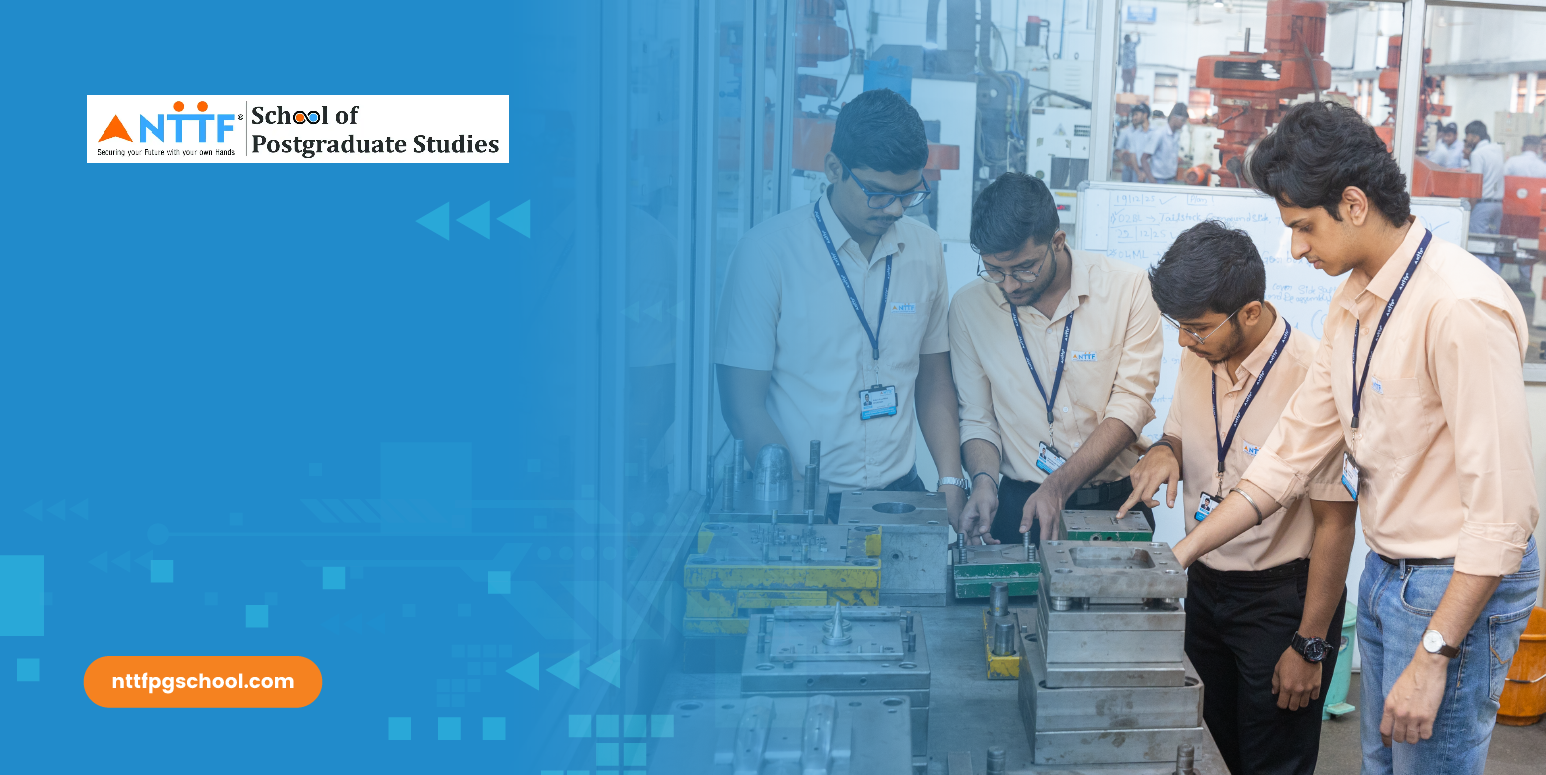
Hands-on Training at NTTF Centers
Students work directly with tools, machines, and design labs, gaining practical confidence.
Industrial Visits
You’ll get to observe how tooling is used in real factories and manufacturing units.
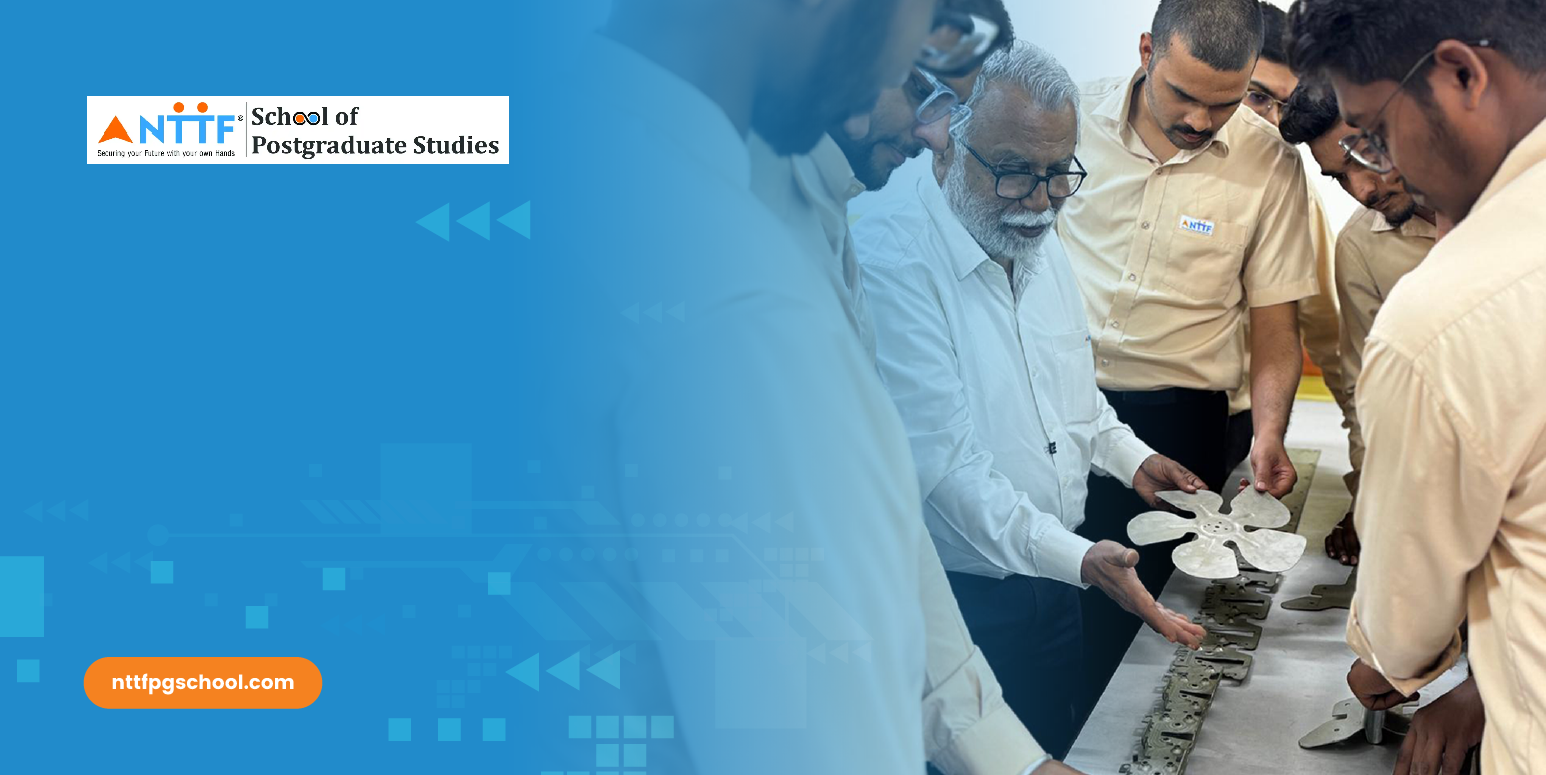
Talks by Industry Experts
Experts from the tooling and manufacturing industry guide students on:
Industry expectations
- Real challenges in tool design
- How to build long-term careers
Visits and Exposure to Industrial Exhibitions and Seminars
Students get the opportunity to attend many exhibitions which help stay updated with current tooling technology, automation trends, and the changing requirements of manufacturers.
This learning approach makes the course more career-driven than purely academic programs.
Selection Criteria
Admission is based on:
- Performance in B.E / B.Tech
- Entrance examination
This ensures that students joining the program are serious and capable of handling advanced tool design training.
Career Scope After PGDTD
This is the most exciting part.
Once you complete the program, you become eligible for roles in core engineering and design-based manufacturing companies.
Top Career Roles After PGDTD
You can work as:
- Tool Designer
- Design Engineer
- Press Tool Design Engineer
- Plastic Mould Design Engineer
- Jigs and Fixtures Designer
- Die Casting Die Designer
- CAD/CAM Engineer
- Tool Room Engineer
- Manufacturing Design Support Engineer
In simple words:
You can directly enter the world of industrial product manufacturing.
Industries That Hire Tool Design Professionals
After completing this Tool Design course (upon successful completion of your B.Tech), students can seek employment in various industries such as:
- Automotive manufacturing
- Tooling and gauging industries
- Plastic manufacturing industries
- Aerospace component manufacturing
- Consumer electronics manufacturing
- Engineering design firms
- Die casting industries
- CAD/CAM and product development companies
Since tooling is needed everywhere, the job scope remains strong across multiple sectors.
Expected Salary After PGDTD
According to NTTF program outcomes:
Students can expect annual salaries up to Rs. 12 lakhs per year, depending on performance.
This makes PGDTD a great career investment for engineering graduates who want higher salary potential in a shorter time.
Lateral Entry Opportunity: Continue Higher Education with PGTE
One of the best advantages of PGDTD is that it also opens the door to higher studies.
Lateral Entry into PGTE (Postgraduate Degree in Tool Engineering)
After completing PGDTD, students are eligible for the following:
Lateral admission to the 3rd semester of PGTE
That means you can continue your academic journey without starting from scratch and you can apply for lateral entry into the 3rd semester of the PGTE program.
So PGDTD works both ways:
- Immediate job opportunities
- Option for higher education and specialization
Key Outcomes (What You Will Be Able to Do After Completing PGDTD)
Graduate trainees by the end of the program, will have the ability to:
- Design press tools for sheet metal components
- Design moulds for plastic components
- Design pressure die casting dies
- Design jigs, fixtures, gauges, and apply GD&T concepts
- Use CAD for tool design and detailing
- Perform process planning for tool manufacturing
- Understand manufacturing methods used in tooling industries
This means you graduate with skills that match real industry expectations.
Why Choose NTTF for PG Diploma in Tool Design?
Many institutes offer design courses. But what makes NTTF different is its strong foundation in technical education and industrial training.
Here’s why PGDTD at NTTF stands out:
- Industry-focused curriculum
- Strong practical exposure
- Expert mentoring and industrial visits
- Career-oriented outcomes
- High demand job roles in manufacturing
- Strong pathway for higher education (PGTE)
NTTF has built its reputation by training students for real industrial careers not just for exams.
Still Wondering if PGDTD the Right Choice for You.
Choose PGDTD if you want:
- A career in core mechanical/manufacturing domain
- A high-growth specialization after B.E /B.Tech
- Strong job roles like Tool Designer or CAD Engineer
- A program that blends design + manufacturing
- Practical industry exposure within one year
- Higher studies option through PGTE lateral entry
If your answer is “yes” to even 3 of these, PGDTD can be a perfect next step.
Your Engineering Degree Needs the Right Direction
B.E/ B.Tech degree gives you a foundation, but your career grows when you build specialization.
The Postgraduate Diploma in Tool Design (PGDTD – CP16) from NTTF School of Postgraduate Studies gives engineering graduates a powerful edge by training them in:
- Press Tool Design
- Plastic Mould Design
- CAD/CAM engineering
- Tooling industry skills
- Real-world manufacturing exposure
If you are looking for a Tool Design course after BE/B. Tech, or a practical and career-focused Press Tool Design course, PGDTD can help you move from being a graduate to becoming a skilled professional.
Because industries don’t just hire degrees, they hire people who can design, solve, and build.