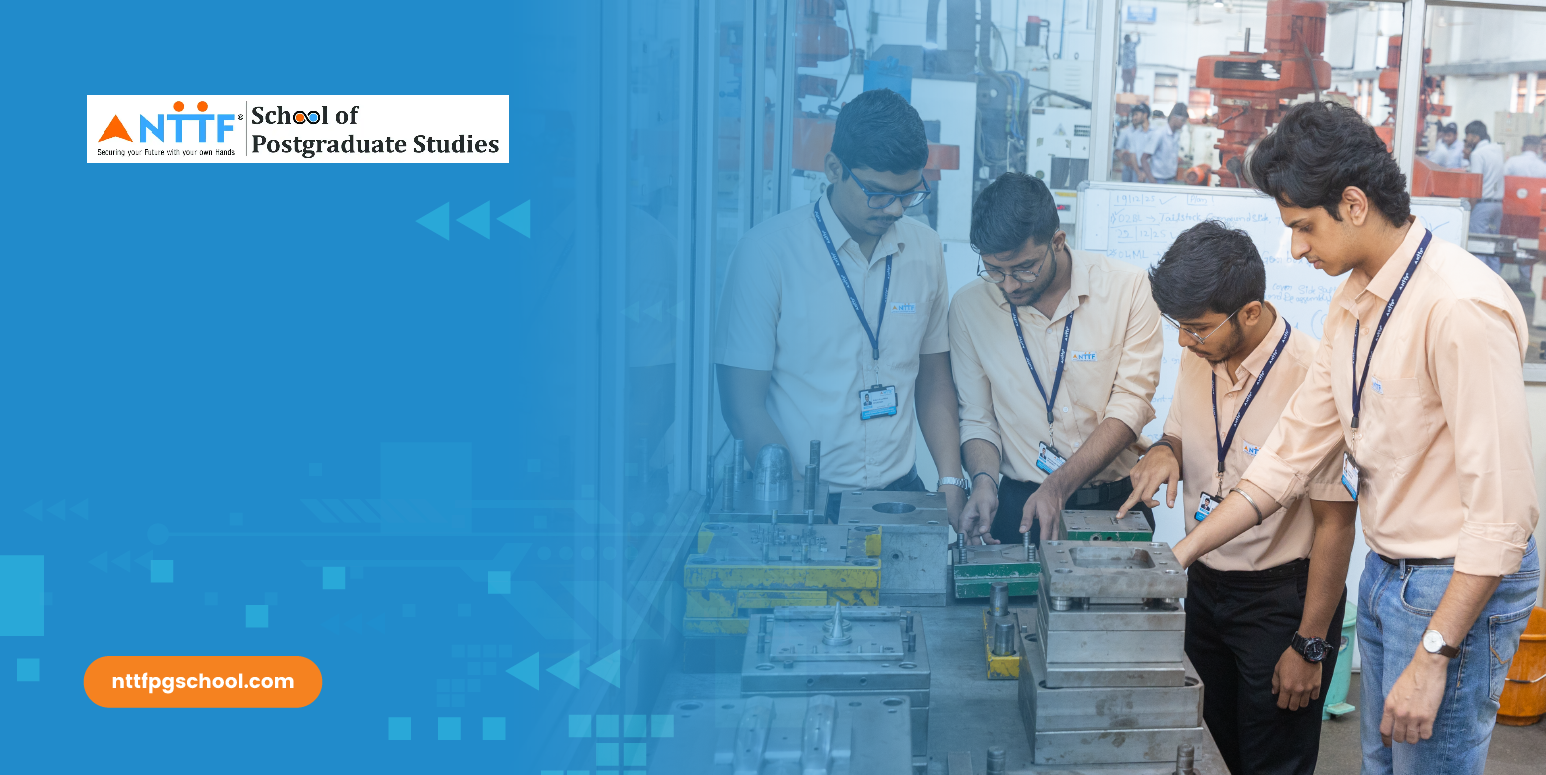
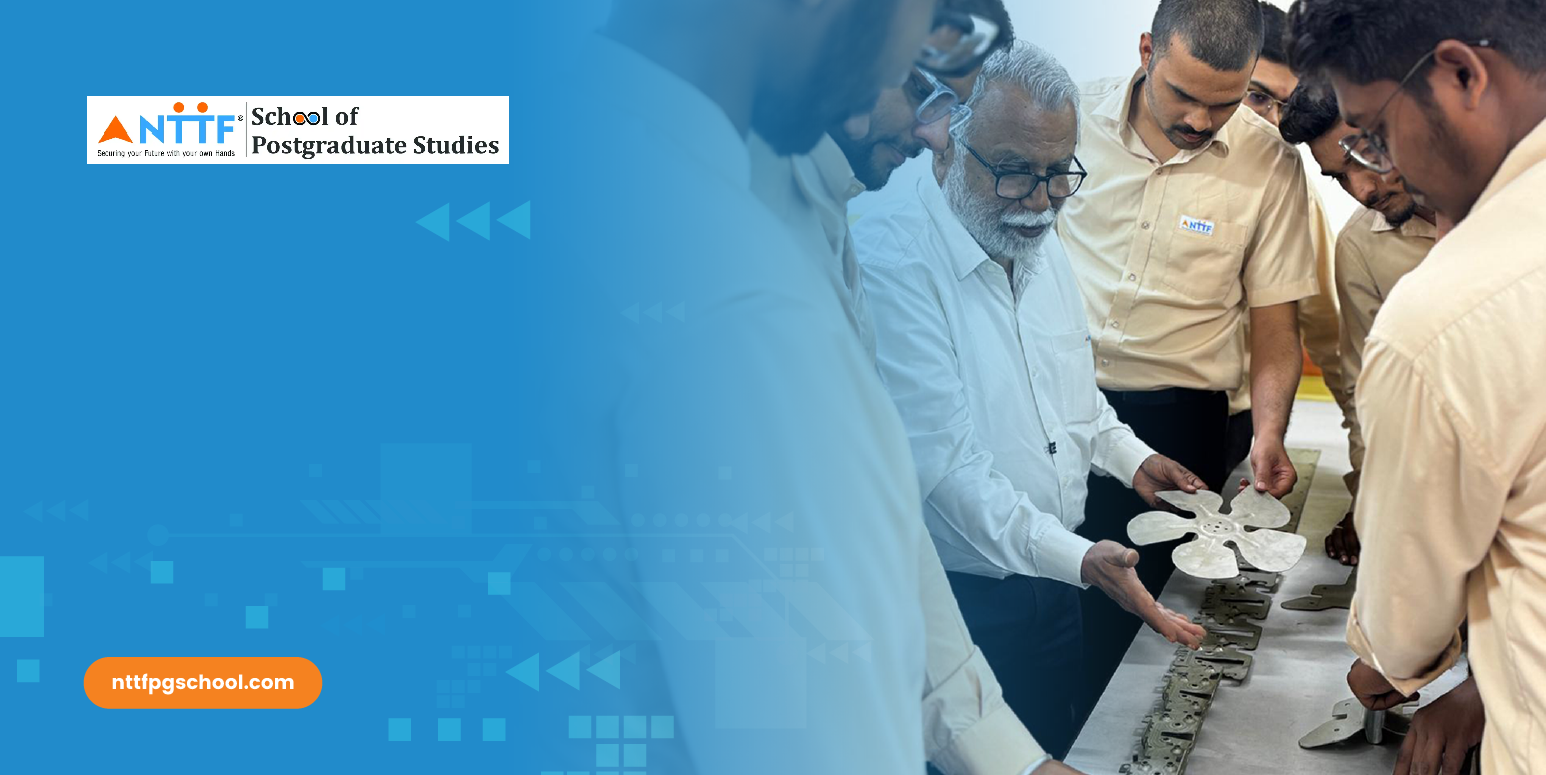
Today, an engineering degree is merely another basic degree, which is why NTTF experts suggest that if one enters a specialized field, they receive placement letters from different industries even before they graduate.
Moreover, professionals with advanced manufacturing expertise are in high demand in today’s product-driven economy. They want all-rounders who can improve tool design, maximize productivity, cut expenses, and spur innovation.
Now the question arises: which course makes a trainee professional? Well, a postgraduate qualification in tool engineering empowers you with exactly that. A PG in Tool Engineering prepares you to take your technical career to the next level. It is the smartest step you can take for deeper knowledge, stronger design skills, and hands-on mastery of modern manufacturing technologies.
Let’s understand the scope, skills you will gain, curriculum, career growth, salaries, and what makes advanced tool engineering courses one of the most future-ready options for ambitious engineers of the future.
What Is Tool Engineering and Why Does It Matter Today?
The Tool Engineering program is designed for graduates from mechanical, production, industrial, automobile, or mechatronics backgrounds. It revolves around aspects of machine and tool designing and manufacturing, which are used for production processes across diverse industrial sectors. The PG Degree is usually a 2-year program that helps you dive deeper into basic to advanced concepts, design methods, simulations, and project thesis. It focuses on:
- Tool design expertise like press tools, plastic moulds, die-casting die, jigs, and fixtures
- Ensuring products can be manufactured accurately, consistently, and efficiently by designing tools used in industries
- Improving production speed and reducing wastage
- CAD, CAM, and CAE software training, hands-on workshops with modern machines, automation, rapid prototyping, and digital manufacturing
Now as the industries adopt smart factories and digital production, there is demand for highly skilled tool engineers. This demand is rising across various industries like automotive, aerospace, medical devices, electronics, plastics, and heavy engineering.
To fulfill this demand in the right way, NTTF PG in Tool Engineering gives engineering graduates a competitive edge. The course helps trainees by equipping them with advanced design expertise and practical experience that undergraduate programs typically don’t have.
Why Choose a PG in Tool Engineering?
- Industry-Ready Skills Beyond Basic Engineering
Unlike generic PG programs, tool engineering is highly specialized and application-driven. It is ideal for graduates who want to work on real production systems, real components, and real machines.
- Perfect for Mechanical, Mechatronics, Production, and Manufacturing Engineers
If you have studied:
- Mechanical Engineering
- Production Engineering
- Manufacturing Engineering
- Mechatronics
- Industrial Engineering
- Aeronautical Engineering and other allied streams of engineering
This specialization is a natural progression that deepens your technical foundation.
- High Demand Across Manufacturing & Digital Industries
Tool engineers are essential in all sectors that manufacture tangible products. Companies increasingly prefer candidates with advanced tool engineering courses because they are job-ready from day one.
- Fast Career Growth
Tool engineers often transition into roles such as:
- Tool Designer
- Manufacturing Engineer
- Product Development Engineer
- Process Planning Engineer
- Quality/Process Engineer
- CAD/CAM Specialist
- Tool Room Manager
- Production Supervisor
- R&D Engineer
The PG qualification adds senior roles and expertise, helping graduates grow faster into leadership or technical specialization roles.
What You will Learn: A Look Inside an Advanced Tool Engineering Curriculum
A high-quality manufacturing engineering course or advanced tool engineering program typically includes:
Design & Engineering Skills
- Press Tool, Casting dies, and Plastic Injection mould design
- Jig and fixture designs
- Product design fundamentals
- Tolerance analysis and GD&T
Advanced CAD/CAM/CAE Tools
- Solid modelling
- CAM programming
- CNC machining simulations
- FEA for tooling applications
- Reverse engineering & digital prototyping
Manufacturing Technology
- CNC programming and advanced machining
- Metal forming and plastic processing
- Additive manufacturing (3D printing)
- Rapid tooling
- Heat treatment and material selection
Practical & Industrial Exposure
- Tool room training
- Industry projects
- Prototype development
- Hands-on learning using real machines
A PG in Tool Engineering is not just theory; it’s a program where you “learn by doing,” making you fully prepared for industrial environments.
Benefits of Pursuing a PG in Tool Engineering
- Understanding of Advanced Tools and Technologies
Once you enter this field, you gain expertise in advanced technologies used by manufacturers across the globe, and this also increases chances of employability. - Better Career Opportunities with Higher Salary Packages
Salaries & job profiles in core manufacturing roles for NTTF PG-qualified tool engineers are comparatively higher than those for diploma or BE/BTech graduates. It is because industries trust our training system. - Opportunities in R&D and Product Development
Tool engineers who graduate from the NTTF school of postgraduate studies work closely with product designers, making it a great steppingstone in innovation and development. - Global Career Compatibility
Tool engineering is universally relevant. Your skills are valuable in India, Germany, Japan, the Middle East, and all major manufacturing hubs. - Strong Foundation for Future Specializations
Graduates can later pursue:- Research roles
- Industrial automation
- Precision engineering
Who Should Pursue PG in Tool Engineering Course?
A PG in Tool Engineering is ideal for you if:
- You are looking for a design oriented and manufacturing-focused career
- You are someone who enjoys designing products, production mechanisms, special purpose machines and industrial components
- You want to explore your capabilities in various sectors like automotive, aerospace, industrial machinery, or plastics
- You prefer practical engineering over purely theoretical roles
- You want to accelerate your growth in production and manufacturing engineering
If you are someone who loves machines, design, engineering challenges, and building real products, this specialization is perfect for you.
Career Opportunities After PG in Tool Engineering
Here are some of the top job profiles:
| Job Role | What You Do |
| Tool Designer | Their role includes designing Plastic injection molds, Press tools, Casting dies, jigs & fixtures for mass production |
| Manufacturing Engineer | Help improve production lines and works on optimizing tooling systems and processes |
| Product Development Engineer | Support product design, prototyping, and testing completely |
| CAD/CAM/ CAE Engineer | Generate 3D models, tool paths, CNC programs, and implement simulation for tooling |
| Quality/Process Engineer | They ensure production line efficiency, dimensions, tolerances, standards, and tooling performance for better workflow |
| R&D Engineer | Work on innovating tools for new materials or processes and driving innovation in tool systems |
| Tool Room Engineer/Manager | They manage and oversee tooling operations, maintenance, machining, fabrication and team |
Industries that hire PG Tool Engineers:
- Automotive manufacturing
- Plastics & polymer industries
- Aerospace components
- Consumer electronics
- Medical devices
- Heavy engineering & machine tool companies
Salary Potential
PG-qualified tool engineers typically earn:
- Entry-level Executives: ₹3.5–6 LPA
- Mid-level Professionals: ₹6–10 LPA
- Experienced/Lead roles: ₹12–20 LPA
Note: Any specialists in mould design, CNC automation, and CAD/CAM usually earn more due to niche demand. The demand in industry for these roles is high, and the number of professionals is less.
Scope of the PG Degree in Tool Engineering
In the last few years, there has been a significant shift in tooling/manufacturing. This transformation is adding to the demand for tooling engineers with advanced manufacturing skills. Here’s how the scope expands:
- Tooling engineers are in high demand in various growing sectors and NTTF’s program explicitly maps these sectors like automotive, aerospace, consumer electronics, medical devices, and precision engineering
- A postgraduate degree helps to ensure you don’t just perform operations, but you strategize properly the tooling flows, optimize manufacturing cost/time, and drive innovation.
- Manufacturers are on continuous lookout for professionals who actually understand tooling for advanced materials (composites, lightweight alloys) and processes (die-casting, injection molding, additive manufacturing).
- Graduate engineers with such specializations enjoy higher employability and are often fast-tracked into roles with leadership potential in manufacturing engineering.

Why Choose NTTF’s PG Tool Engineer Program?
- NTTF has strong industry connections, giving access to internships and placement support.
- We have a strong alumni network of more than 1 lakh graduates who are placed in leading companies across the globe.
- Our alumni are even the employers who run their own companies, which also adds up as a strong placement link.
- Reputation of over six decades in technical training and skilling engineering talent.
- A focused curriculum for postgraduate engineering courses, aligned with current and emerging tooling practices.
- NTTF puts high emphasis on 65% practical training with workshops, seminars, industrial visits, CAD/CAM labs, and practical projects.
Fees and Duration
- Duration: 2 years (4 semesters) for the PG Degree in Tool Engineering.
- Fee (Regular category): ₹82,000 per semester at NTTF.
(Industry-nominated category fees vary.) (Fees vary for Foreign National & NRI category candidates.)
Check details: Postgraduate Degree in Tool Engineering | Advanced Tool Engineering Courses
A Smart Investment in Your Technical Career
The future of manufacturing is smart, digital, automated, and innovation-driven, which means it is shifting faster than ever. The tool engineers are at the center of this transformation, and if you don’t step up now, you might miss out on the best opportunities in your desired roles.
Choosing a PG in tool engineering means trainees gain deeper technical expertise, which not just adds a qualification to your resume, but it builds your ability to solve real engineering problems. It helps engineers design world-class tooling systems and contribute to industries that power the global economy.
Explore the program today and take your first step into advanced tool engineering. Postgraduate Degree in Tool Engineering | Advanced Tool Engineering Courses